STONECHAT
The one that clicks
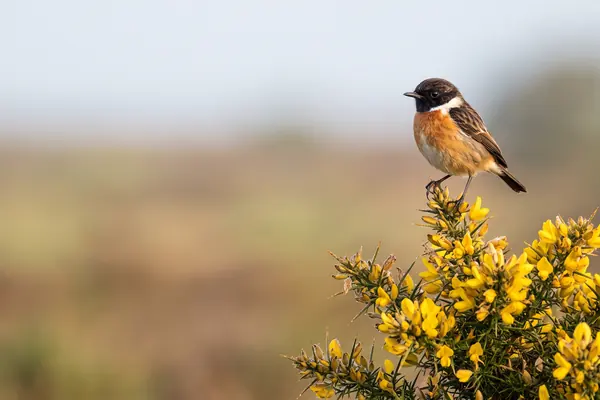
Robin-sized, the male with a black head, white neck patch and orange-red breast. Many stay all year, and in winter they spread across most of the UK.
Check what you saw doodelchat
THE CHAT BIRDS OF HEATH AND MOOR
Some birds are named for their chat.
Tell them apart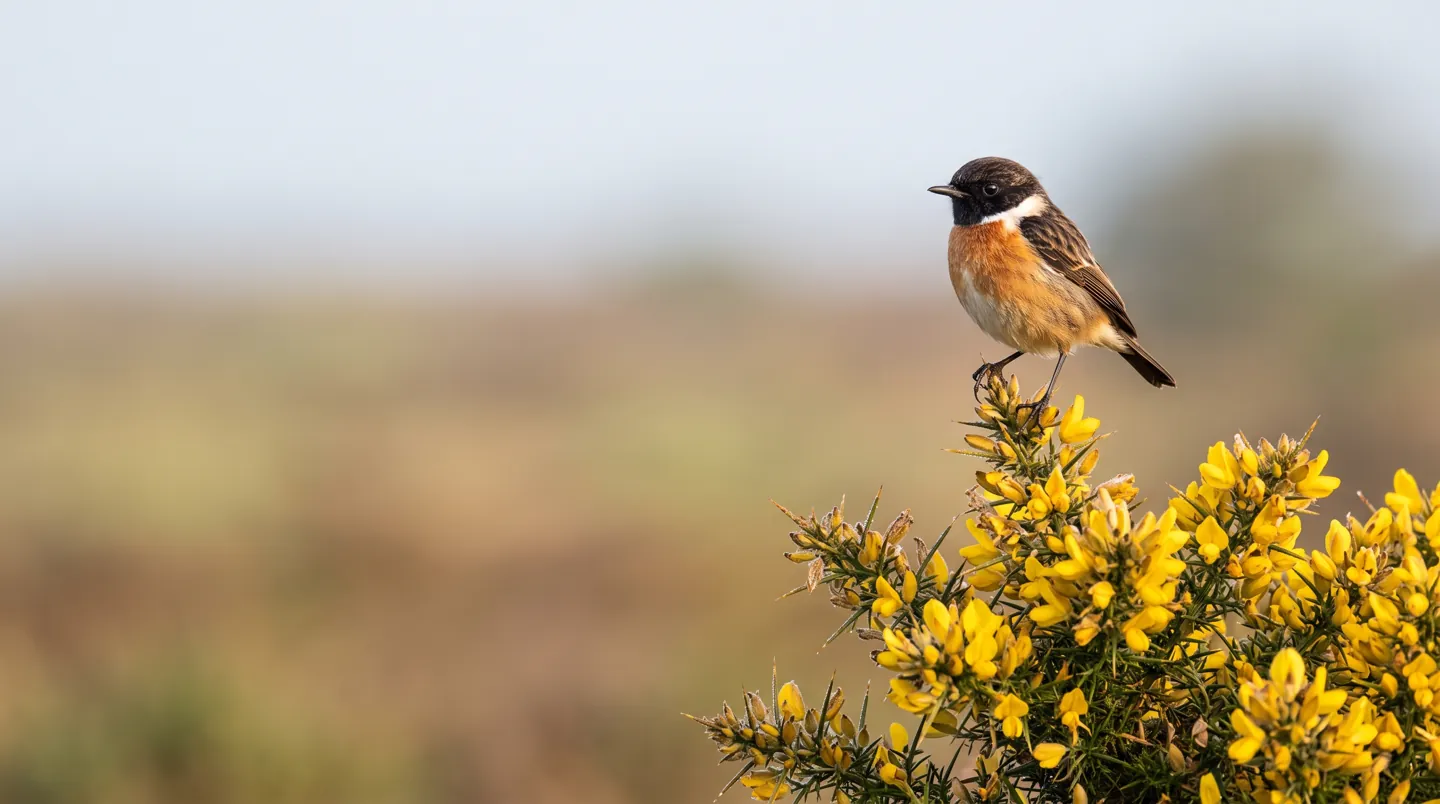
LISTENfor the click
The stonechat's sharp call sounds like two stones being tapped together, says the RSPB. It shares heaths and moors with two look-alikes, the whinchat and the wheatear, and the three are faring very differently.
At a glance
+281%
UK breeding population change, 1995–2024
The BTO says a series of mild winters is thought to favour stonechats that stay behind, and the breeding range is creeping east from its western strongholds.
STONECHAT · BTO
−64%
UK breeding population change, 1995–2024
Whinchat moved to the UK Red List in 2015. The BTO links its fall to habitat degradation, and it winters in the humid zone of West Africa, where our migrants show the steepest declines.
WHINCHAT · BTO
TWO NUMBERS WORTH KNOWING
Change in the UK breeding population,
from BTO survey data for 1995 to 2024.
Source: BTO BirdFacts for stonechat and whinchat (Breeding Bird Survey trends). The BTO gives UK breeding populations of about 65,000 pairs of stonechat and 50,000 pairs of whinchat (2016).
A QUICK CHAT CHECK
Pick the clue you noticed. The answer shows which bird it points to; the bar shows its level of UK conservation concern, from green to red list.
Plumage from the RSPB and Woodland Trust; conservation lists from BTO BirdFacts (UK Birds of Conservation Concern).
THE SHORT ANSWER
All three perch up on low bushes, rocks or posts.
Plumage, season and call tell them apart.
STONECHAT
Robin-sized, the male with a black head, white neck patch and orange-red breast. Many stay all year, and in winter they spread across most of the UK.
Check what you sawWHINCHAT
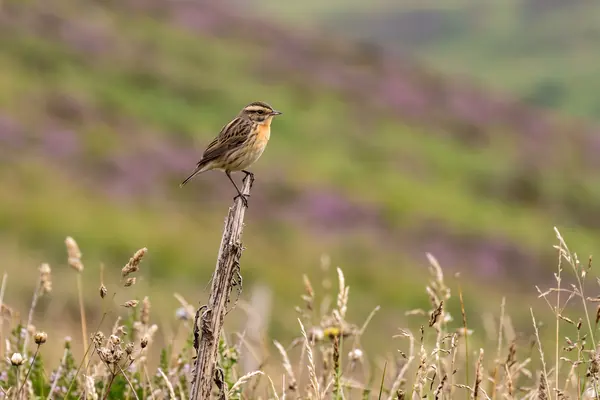
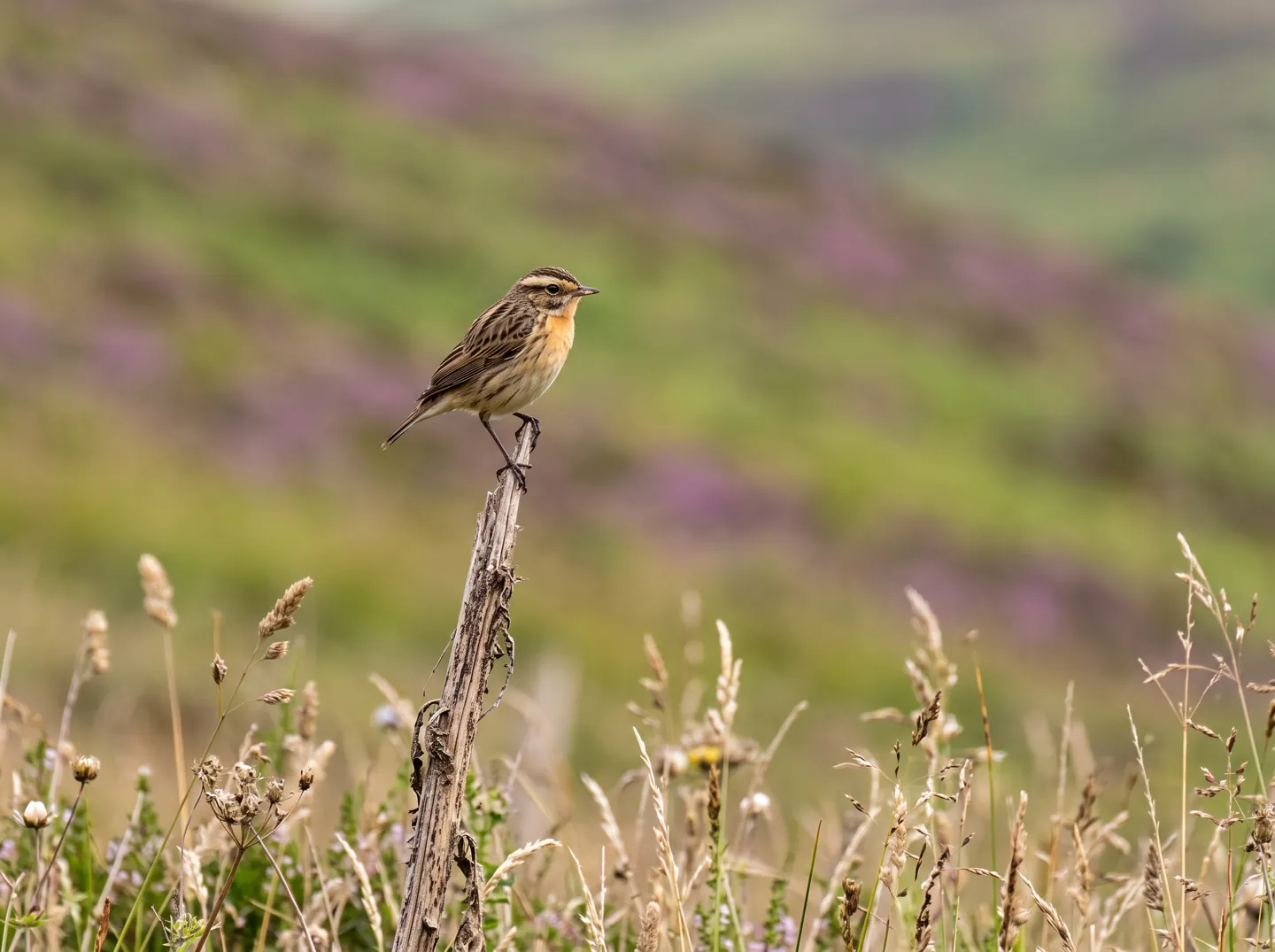
Streaky brown with a prominent white stripe above the eye. It arrives in April, winters in Africa and is now on the UK Red List.
See the numbersWHEATEAR
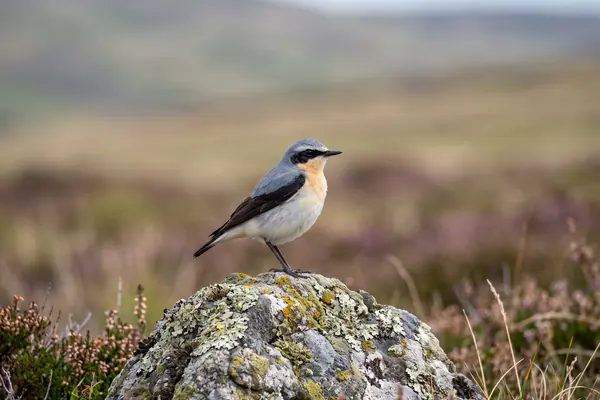
Shows a white rump and a black T on the tail in flight. Its name comes from Old English for 'white' and 'arse', says the Woodland Trust.
Long-distance travellers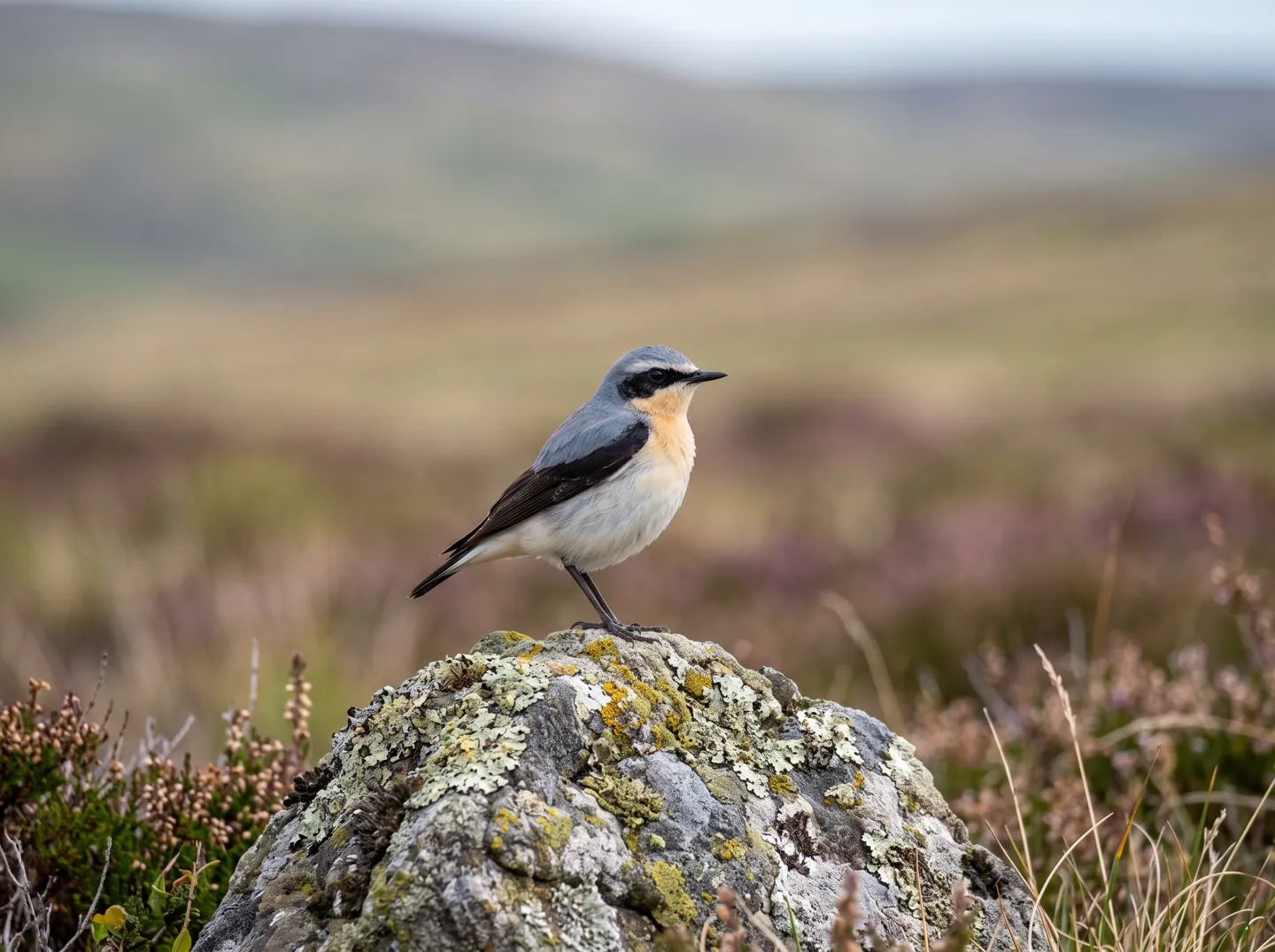
FOUR TIPS FOR FINDING CHATS
Chats like a lookout. These tips come from the RSPB and BTO descriptions of where and when each one turns up.
The BTO says stonechats are often seen perched prominently on gorse on heathland, flicking their wings.
Stonechats spread out more widely in winter, says the RSPB; the BTO found them in 83% of UK 10-km squares in winter.
Whinchats breed in upland areas of northern and western Britain. The BTO estimates Wales holds around a third of them.
A small bird that shows a white rump and a black T on the tail in flight is likely a wheatear.
LONG-DISTANCE TRAVELLERS
Wheatears are here from early March to late October and winter in Africa. In spring and autumn, larger and brighter wheatears heading to and from Greenland and Alaska pass through the UK, and the BTO says some fly non-stop across the Atlantic to northern Spain.
Whinchats make the trip too. BTO ringing records include one whinchat that travelled 5,465 km from its ringing site in Scotland to Ghana.
Questions
The RSPB says the stonechat utters a sharp, loud call that sounds like two stones being tapped together.
Look at the face. A male stonechat has a black head with white at the side of the neck. A whinchat is streaky brown with a prominent white stripe above the eye and an orange-buff breast.
The Woodland Trust says it comes from the Old English for 'white' and 'arse', after the bird's striking white rump. The white rump and black T on the tail show clearly in flight.
Stonechats, yes: many stay all year and spread more widely in winter. Whinchats and wheatears are summer visitors that spend the winter in Africa.
It depends on the chat. The BTO lists the stonechat as green, the wheatear as amber and the whinchat as red, after a 64% fall in its UK breeding population from 1995 to 2024.
Sources
ABOUT THIS NAME
doodelchat.com is part of the DoodleSale portfolio. It isn't in an auction right now, but you can ask about leasing it.